
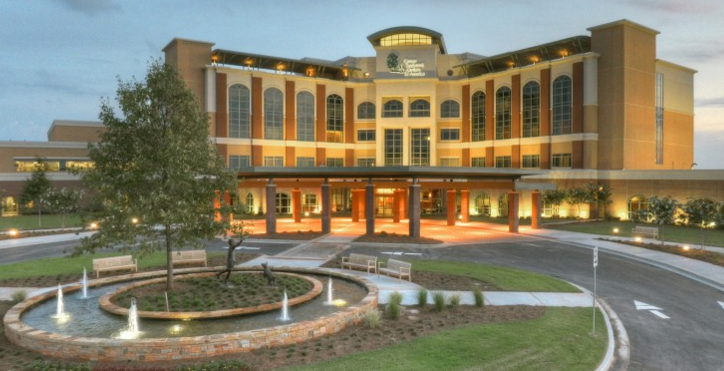


If there are a few things I know I don’t like, it’s men who say, “I guess chivalry ISN’T dead,” and cancer. My ex-wife was not a man who said that, but she was one of the main heads at CTCA, Cancer Treatment Centers of America, which has now been renamed to City of Hope (way worse name–just saying).
I had spent days, weeks, and overall months, on fancy work trips with her and the big wigs at the CTCA. We feast, we chatted, I lied about what I did for a living to try and seem impressive, I flirted with one of their wife’s just to spite them, and I learned so much about what cancer REALLY is and why it will be next to impossible to cure.
As World Wide Cancer Research put it:
To understand why we haven’t cured cancer yet, the most important thing to know is that cancer is not one disease. Instead, it’s an umbrella term for more than 200 distinct diseases – that’s why we fund research into any type of cancer.
Each broad cancer type has many sub-types, and they all look and behave differently because they are different on a genetic and molecular level. This is because cancer arises from our own cells, so each cancer can be as different and diverse as people are.
Underlying the more than 200 different cancers are a myriad of different genetic mutations. Every cancer is caused by a different set of mutations and as the tumour grows, more and more mutations accumulate. This means that every tumour has an individual set of mutations, so a drug that works for one cancer patient, might have absolutely no effect on another.
That’s why we fund researchers like Dr Diego Pasini in Italy, whose research project aims to understand why a particular mutation makes some cancers more likely to develop.
Not every cancer cell in a tumour will have the same genetic mutations as a neighbouring cancer cell. That means that treatments can often kill one type of cell in a tumour, while others survive the treatment, allowing the tumour to grow again.
The genetic mutations that cancer cells acquire over time mean that the cells change the way they behave. This can be an incredibly difficult problem during treatment because the mutations can lead to cancer cells developing resistance to a treatment over time, making it ineffective.
If that happens, the patient will then have to be put on to a different treatment – but again, the cancer could develop resistance to the new drug. This is why we fund researchers like Maite Huarte, who is trying to figure out how to overcome this resistance.
Normal cells have certain mechanisms in place that stop them from growing or dividing too much. Cancer cells have lost these control mechanisms and can develop an arsenal of tricks to avoid being killed.
I am happy that we are still working towards that (but also, hey, diabetes is waiting in the wings) but the most we can do as a small community is make life worth living and make treatment affordable.
That’s where Happy Valley Baptist Church and Georgia Christian Wrestling Federation come in and helping raise money is exactly what they did.
I love Pro Wrestling. I think it’s the perfect form of media. It is dance, improv, fighting video games, soap opera, sketch comedy, sports, and sexy all in one. It has no flaws (except The Great Khali) and only gets better the more you deep dive into it. I wouldn’t just trust wrestling to cure cancer, but to bring about world peace–through choreographed fighting with each other.
I digress.
In an event promoted by McKoon Funeral Home (kinda weird considering it’s about keeping someone alive) and Baxter and Sons Towing, The wrestling company was able to raise over $2,000 for the medical expenses of Lonnie Patterson–even letting him swing a frying pan at the companies top heel (that means bad guy).
Anyway that we can help someone fighting this incredibly brutal battle is important, and reaching out to the church will open up your opprotunity to help. But more than anything, we’re proud of Pro Wrestling.



 Newnan Time with Harold